
You build things. You might get hurt. Here's what you need to know.
If you're a carpenter working alone, you might get hurt on the job. You might twist your back. You might cut your hand. Workers' comp helps pay for medical care if that happens to someone who is covered. But by default, it does not cover you, the owner. You can choose to be covered, but it will cost more. The rest of this article is about what you actually need as a carpenter who works alone.
What kinds of injuries happen to carpenters?
Carpenters use tools, climb ladders, and move heavy things. You might hurt your back from lifting. You might cut your hand on a saw. You might fall from a ladder. These are the kinds of injuries that workers' comp helps pay for. But again, it only helps people who are covered. If you are the only person working, and you are not included in the policy, it does not help you. It helps other people who might be on your job site.
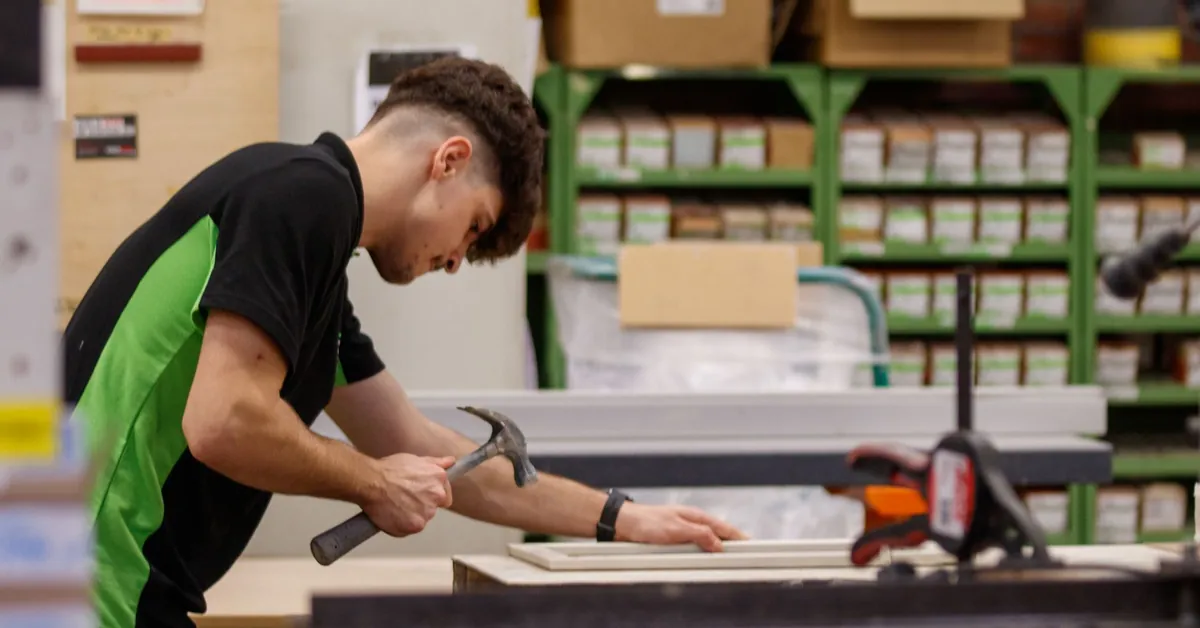
Tools like circular saws and nail guns can cause cuts or punctures. Ladders and scaffolds can lead to falls. Reaching and bending can lead to back injuries. These are all real risks when you're building things every day.
Who asks you for proof of coverage?
Some people will ask you for proof that you have workers' comp. This is usually a form called a certificate. If you are working for a school, a government project, or a big company, they might ask for it. They want to make sure that if someone gets hurt on your job, they can get medical help. You need workers' comp to give them the certificate. You can start your quote right now to get one.
General contractors, property managers, and clients often need a certificate. They show it to their own bosses or insurance companies to prove you're covered. Without the certificate, you might not get the job — even if you're good at what you do.
What does the policy actually cover?
Workers' comp helps cover medical bills for work-related injuries. It also helps with lost wages if the person can't work. But by default, it does not cover you, the owner. That means if you are the only person working and you get hurt, it does not pay for your care. If you want to be covered, you can choose an owner inclusion election when you get your quote. It costs more. You can get your quote in minutes to see the price.
Workers' comp does not cover things like car accidents, home injuries, or injuries not tied to the work you do. It also does not cover lawsuits from people not in the policy. If you're sued, general liability insurance might help — but that’s a different kind of insurance and not what this site offers.
What happens when you hire someone?
If you hire a helper, things change. You are now an employer, and your state might require you to have workers' comp for them. The helper is covered by the policy. But you, the owner, are still not covered by default. You have to choose to be included again. You might also need to tell your state about the new worker. Your quote will tell you if you need to do anything more.
Your state may have rules about when you must have coverage for employees. Some states say you must cover them from day one. Others let you wait until they start. You can get your quote to see what your state says and how much it costs for more than one person.
What if you are working with a contractor or a crew?
Even if you are working with other people, you are still responsible for your own coverage. If someone else is your boss, they might have their own policy. But if you are your own boss, you need your own workers' comp. You can start your quote to get the right one for your kind of work.
Working with others means more tools, more movement, and more people on the site. It also means more chances for someone to get hurt. If someone gets injured, and you don’t have coverage for them, you might be the one who has to pay. That’s why coverage matters, even if you don’t hire anyone yourself.
How does your state decide what you need?
Each state has its own rules. Some states require workers' comp for all businesses with even one employee. Others let you decide. You can get your quote to see what your state needs. The quote will tell you the real price and the code for your kind of work. The code helps set the price, but it does not change what the policy covers. The coverage is the same no matter what the code is.
Some states, like California, use their own rating bureau to set prices. Others use the NCCI system. Your quote will tell you which code your work is assigned. You can learn more about class codes to understand how they work in your state.
What if you're doing a different kind of carpentry?
Not all carpenters do the same work. If you build cabinets, or fix up homes, or do carpentry for theaters, your state might treat you differently. Some states use different codes for different kinds of carpenters. The kind of tools you use, the height you climb, and the materials you work with can change the cost. Your quote will show the right code for your kind of work.
For example, a stage carpenter might use different tools and face different risks than a home builder. Your quote will use the right code for your work. If you're not sure what you do, you can still get a quote — the system will help you choose the right code based on your answers.